
Find Tucker Residents Stepwise
The Tucker residents directory is a trail across records kept for different legal jobs. Property appraisal identifies titled owners. Deeds identify parties to land transfers. Court dockets identify parties and case events. Voter tools validate registration. City files name applicants, officials, businesses, and people tied to municipal matters. Old directories and archives supply household snapshots that current rolls cannot.
Begin with the fact closest to the person. A street address belongs first in appraisal. An owner's name belongs in the parcel roll and deed index. A court claim belongs in the court with jurisdiction. A person from the 1970s belongs in directory volumes, newspapers, and census records. Renters, family members, and unlisted occupants may never appear in a property roll.
- Search the DeKalb property roll by owner, address, or parcel ID.
- Confirm the mailing label and city boundary with parcel and Tucker GIS.
- Use LandmarkWeb to connect the name and parcel to a recorded deed.
- Check the correct voter, court, vital, business, or license source for the claim.
- Use library directories and archives for past households.
- Request an existing record from its custodian when no portal covers it.
Write down exact names, dates, roles, parcel IDs, case numbers, and book-page references. Two matching facts are the minimum before treating two index hits as the same Tucker resident.
Tucker Records Begin in DeKalb
Tucker became a city in 2016, but the community and its resident trail are far older. Most durable records remain countywide. The DeKalb Clerk of Superior Court keeps deeds, plats, liens, and Superior Court files. Property Appraisal maintains parcel ownership and values. DeKalb Elections manages registration. City Hall keeps ordinances, minutes, contracts, local elections, permits, planning, licensing, code, GIS, and municipal court material created within city authority.
DeKalb Real Estate Division
556 N. McDonough Street
Decatur, GA 30030
404-371-2836
DeKalb Property Appraisal
Manuel J. Maloof Center
Decatur, Georgia
Weekday office and phone help
Office choice follows who created the file. A post-incorporation Tucker permit may be municipal, while the parcel deed is still with DeKalb. Never send a broad request to every office when one precise custodian can answer it.
Search Tucker Property Names
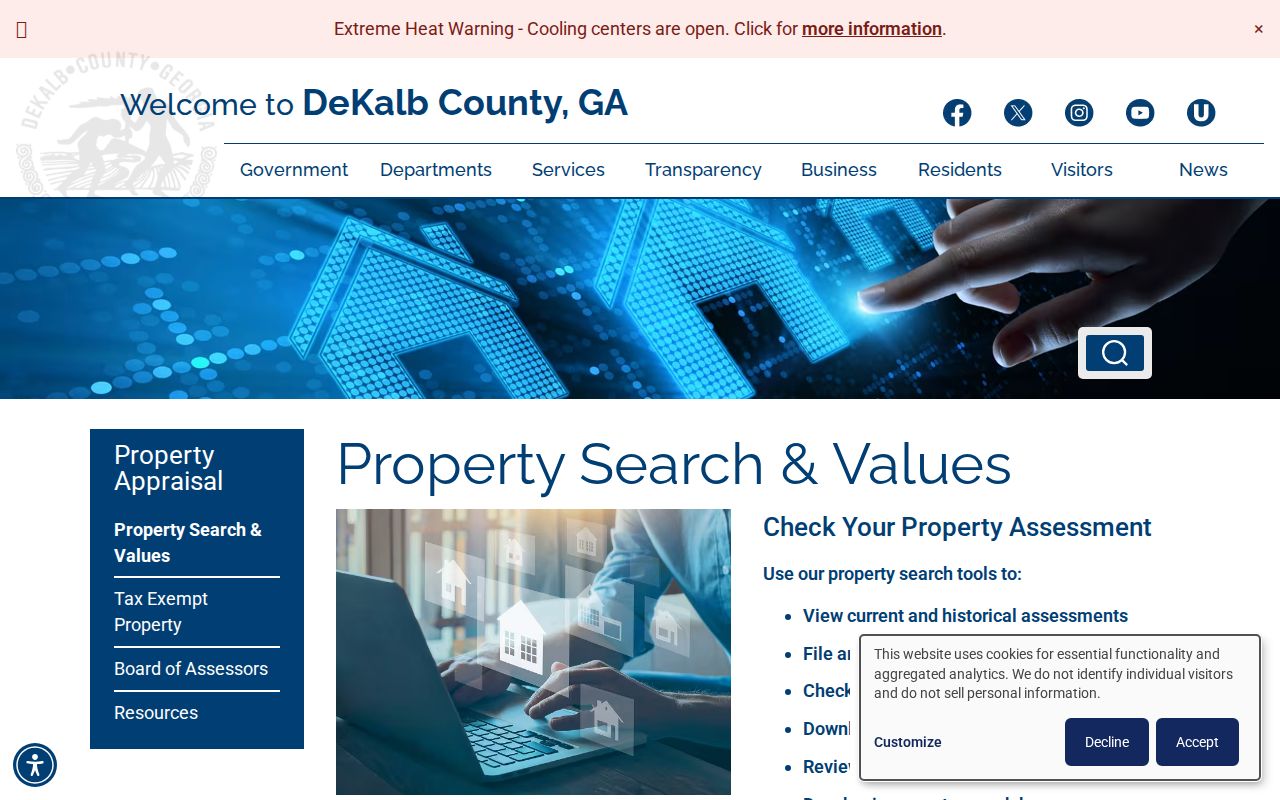
The DeKalb Property Appraisal search accepts owner name, street address, or parcel ID. A parcel profile can show owner and co-owner, January 1 owner, situs, a separate mailing block, tax district, neighborhood, land use, zoning, values, sales, permits, photos, sketches, exemptions, notices, appeals, and an assigned appraiser. These fields make it the strongest first stop for a current ownership question.
| Search field | Input | Best use |
|---|---|---|
| Owner name | Surname or recorded owner form | Find titled Tucker parcels |
| Address | House number and street | Open one physical site |
| Parcel ID | County parcel identifier | Return to an exact tract |
| Situs | Result field | Identify physical location |
| Mailing address | Result field | Identify tax correspondence destination |
The source page shown below leads to the official search and explains current and historical assessment information.
A mailing mismatch can reflect a trust, estate, business, representative, or owner preference. It does not prove vacancy or identify a renter.
Connect Tucker Parcels to Deeds
A parcel card is an assessment record, not the recorded transfer. Move from the current owner's indexed name or parcel ID to DeKalb LandmarkWeb. Its search modes include Name, Document, Book/Page, Parcel, Date, Instrument, and Legal. The online notice states coverage from 1979 to the present. Search all plausible spelling forms because names, trusts, and entities may be indexed differently.
The official LandmarkWeb screen appears below.
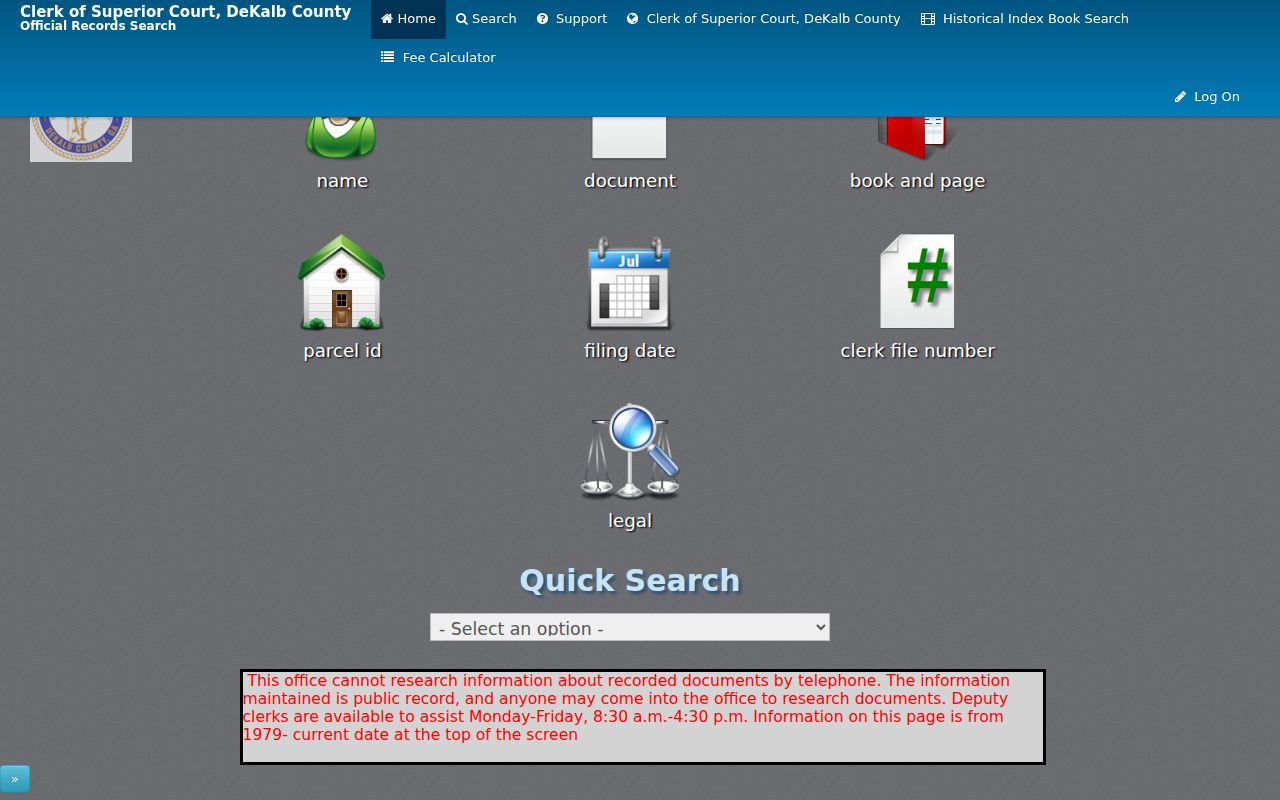
A result can identify grantor, grantee, document type, recording date, instrument number, book and page, legal text, and parcel reference. Grantor means a party transferring an interest; grantee means a party receiving one. Retrieve the image for context.
The courthouse public room provides computers and older books. Mail requests can use book type and page. Regular copies cost $1 per page, plats $2 per page, and certified copies $2.50 for the first page plus $0.50 for each additional page. The clerk also points researchers to the separate statewide GSCCCA channel.
Tucker City Hall Name Trails
City files begin with Tucker's municipal era. The City Clerk keeps council minutes, ordinances, contracts, election material, and other city documents. Planning, building, occupational tax, alcohol licensing, code enforcement, GIS, and municipal court files may name an owner, applicant, respondent, or business contact. None is a general household roll.
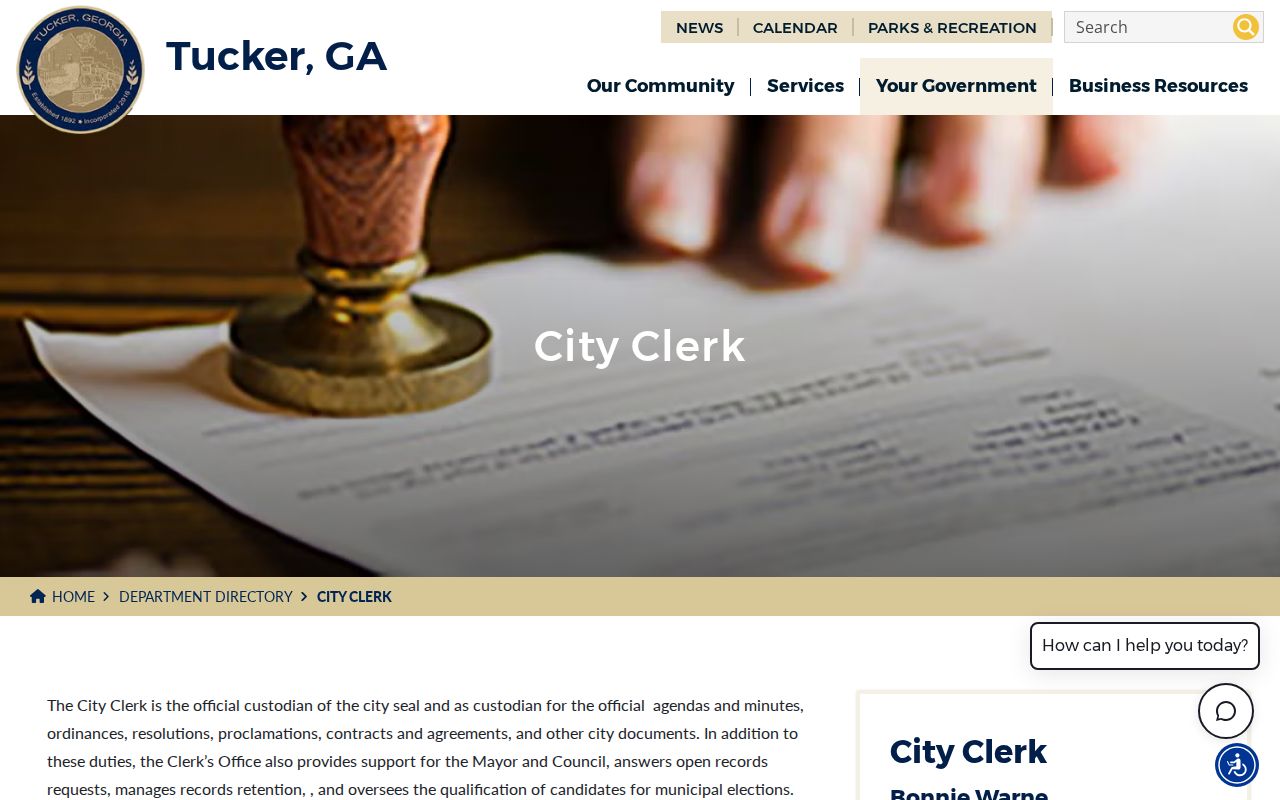
The Tucker City Clerk page identifies the municipal records office.
The city staff directory is searchable and sortable, with name, title, department, phone, and email fields. It is a public-work contact list. A listed employee's office role should never be turned into a claim about a private address.
Code complaints carry a notable local privacy choice. Tucker warns that a complainant's supplied name, phone, or email may be released under open-record law, while the form allows anonymity. That warning shows why researchers must read each source's purpose before reusing a name.
Request Missing Tucker Records
When no index exposes an existing city record, use Tucker's JustFOIA route. State the record type, address or person, date range, department, case or permit number, and desired format. Georgia agencies must respond within three business days, subject to exemptions and lawful fees. A response may give a production estimate and cost rather than deliver the record at once.
The Tucker open-records page provides the submission and invoice path.
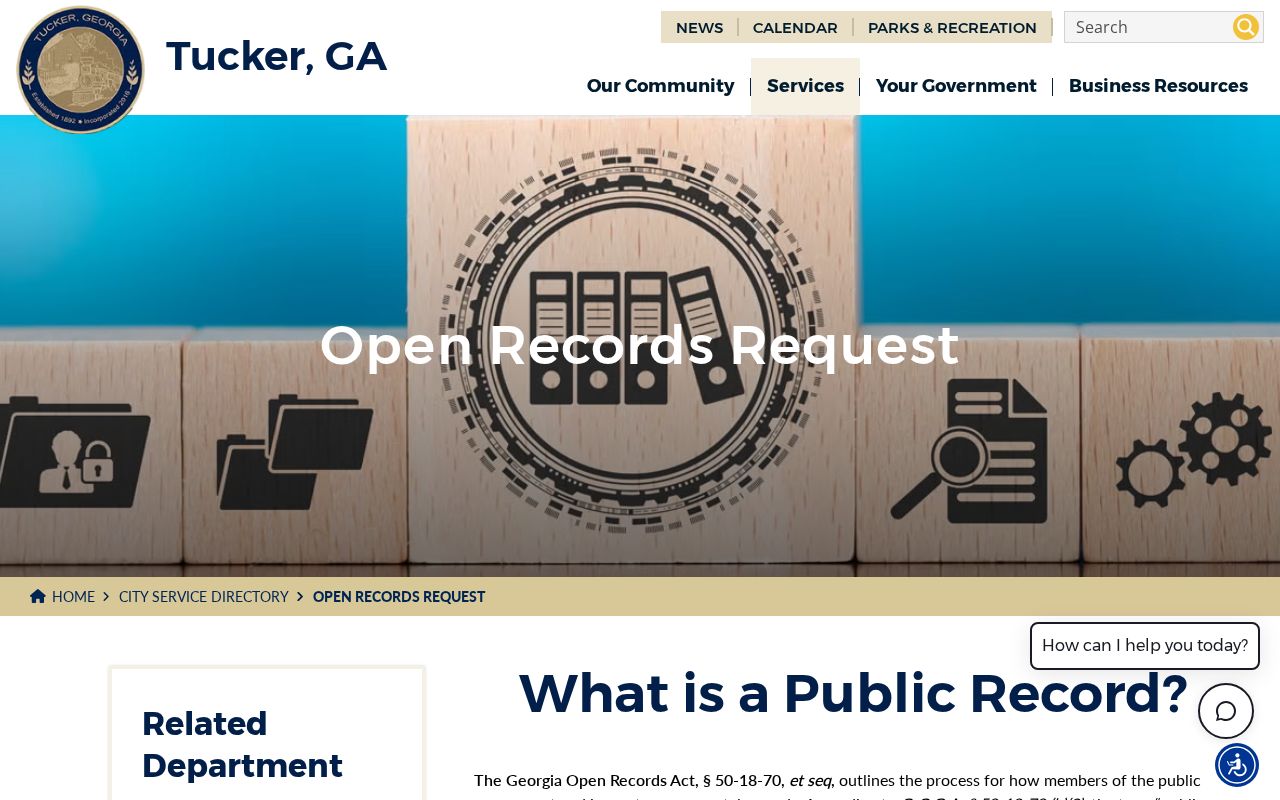
The city can produce records it holds, but it need not create a new resident list, answer research questions, or obtain county files. Ask for an existing permit, complaint, disposition, list, report, or correspondence set.
The Georgia Open Records Act resources explain the statewide framework.
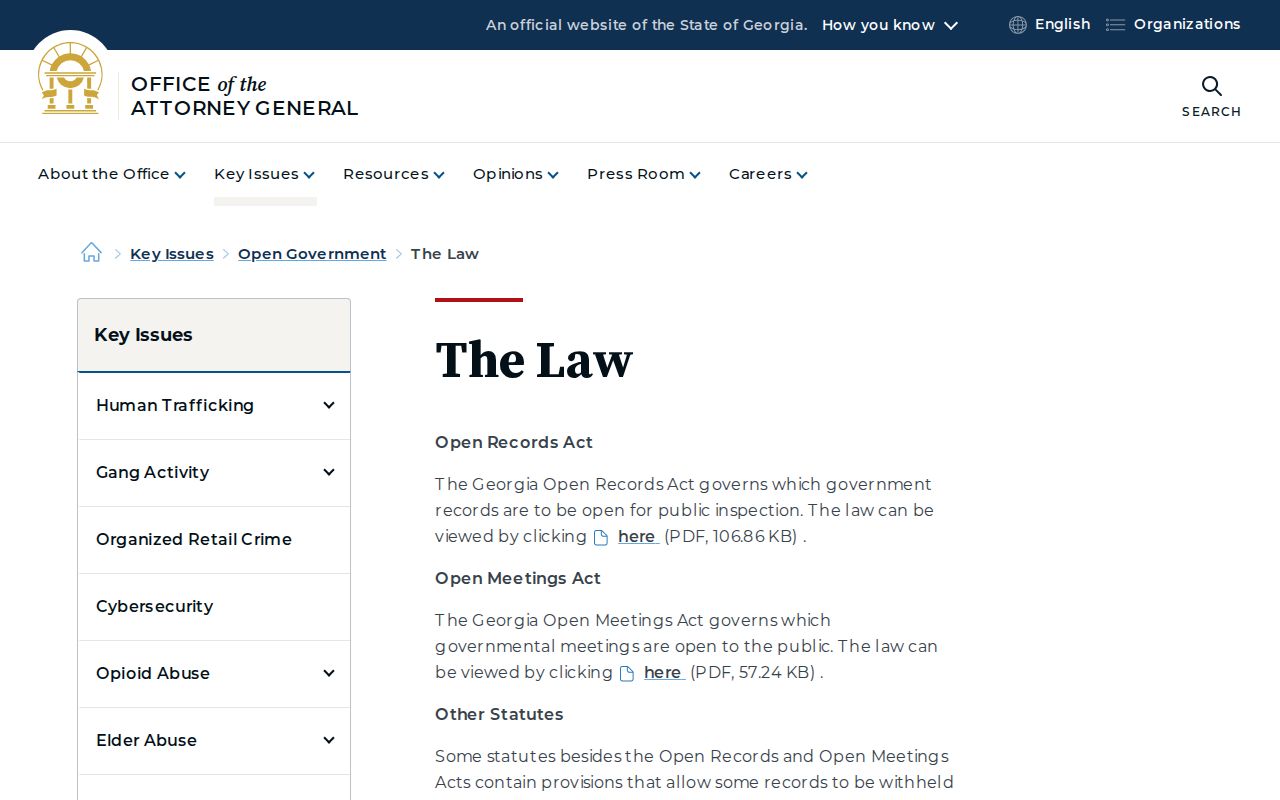
The official law page helps distinguish a delay, fee estimate, exemption, and referral to another custodian.
Current Tucker Residents Directory Sources
Current records resemble directories only within their defined populations. The appraisal roll lists titled owners, not all occupants. My Voter Page verifies one registered voter after identity input. Landmark indexes parties to recorded instruments. City directories list staff or public business contacts. Court indexes list parties. Each source may omit a person who lives in Tucker.
| Source | Who Appears | Keeper | Access |
|---|---|---|---|
| Property roll | Titled owners | DeKalb Property Appraisal | Free web search and office |
| Deed index | Instrument parties | Superior Court Clerk | 1979-current web; older counter |
| My Voter Page | Validated individual voter | Georgia Secretary of State | Personal identifying input |
| Court dockets | Named case parties | Correct court clerk | Portal, terminal, or request |
| City staff directory | Municipal employees | City of Tucker | Free searchable table |
Official records include custodian, date, record number, and legal role. Commercial people-finder summaries can merge old addresses and same-name people, while charging for facts that may be stale. Use an official index to frame the question and the underlying document to verify it.
Use Tucker Voter Tools Carefully
Georgia My Voter Page asks for first initial, last name, county, and date of birth. It returns registration, polling, district, ballot, and election information for an individual match. It is not a street-browse feature, and nonappearance does not prove someone does not live in Tucker.
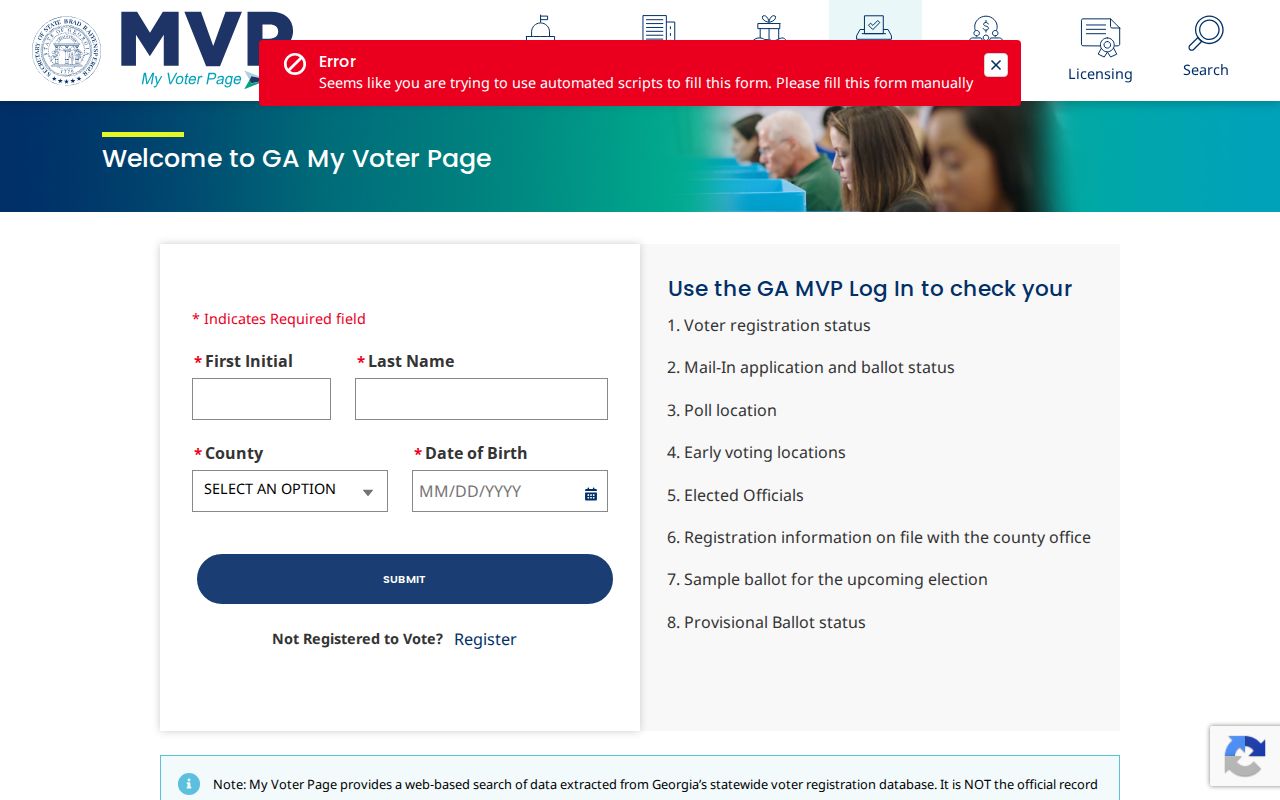
The screen's identity checks show why MVP and a bulk voter file are distinct access channels. DeKalb Elections holds local administration records. The Secretary of State separately sells voter lists by offered geography and status. Protected data and lawful-use limits still apply, and participation history never reveals a candidate choice.
Tucker Votes uses a home address to return City Council, county commission, state legislative, and other districts. It is a geography cross-check after annexation, not a resident roll.
Choose the Right Tucker Court
Tucker Municipal Court covers qualifying ordinance, misdemeanor, and traffic matters inside its jurisdiction. DeKalb State Court handles its statutory county civil and criminal work. Superior Court handles felonies, divorces, equity, title, and major civil matters. Magistrate Court covers small claims and other assigned proceedings. Probate Court handles estates, wills, guardianship, and marriage licensing. Federal matters belong in the Northern District of Georgia.
The DeKalb court records portal provides a current county search path.
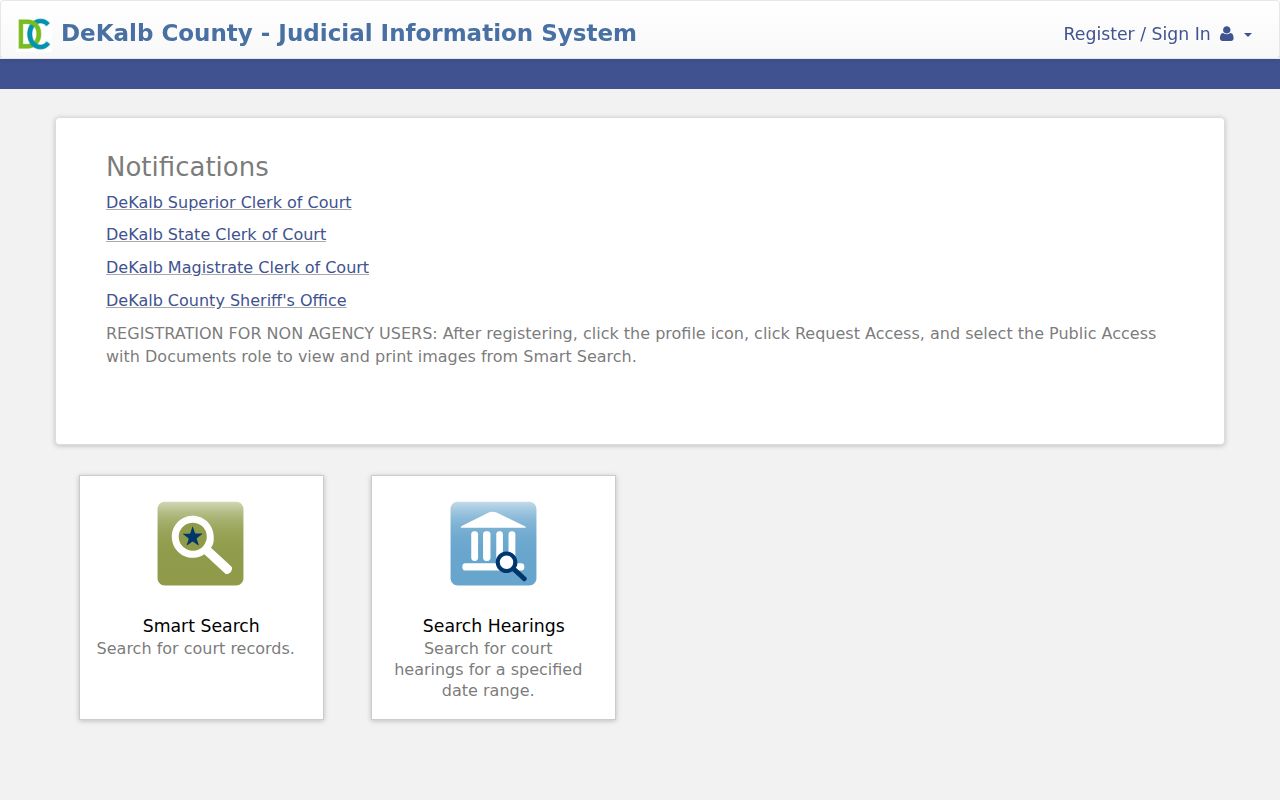
A docket result may show case number, parties, role, case type, filing date, judge, events, and status. An index is not a finding that a same-name Tucker resident is the party. Match the role, date, address where lawful, and underlying file.
Confirm Tucker Vital Events
Vital records answer event questions, not current-location questions. Georgia DPH registers births, deaths, fetal deaths, marriages, and divorces. Birth certificates are restricted to the registrant and authorized family or legal representatives. Death releases follow state rules and Social Security redaction. Marriage and divorce copies follow their own probate, court, or state routes.
The Georgia Vital Records hub supplies current ordering paths.

DeKalb Library offers useful index leads: Georgia deaths from 1919 through 1993 on microfiche and 1994 through 1999 on CD, plus marriage and divorce registers for defined years. An index can guide a certificate or decree request but does not replace it. Georgia's current pages do not state one universal fifty-year or hundred-year opening rule.
Historical Tucker Residents Directory
Printed sources fill gaps between deeds, censuses, and life-event records. The only identified countywide DeKalb directory is from 1939. Tucker and Stone Mountain volumes survive for 1970, 1972, 1974, 1975, and 1976. Broader Atlanta and suburban directories were combined until 1956, later split, and ended around 1991. DeKalb Library's general directory holdings reach back to 1928.
A directory entry can supply name, spouse, occupation, and street address. A reverse or criss-cross section arranges entries by street and house number. Coverage varies, so a missing entry means only “not found in this volume.” The full shelf and reading method belong on the Tucker city directory page.
- Roll
- An official list kept for a defined public purpose, such as property appraisal.
- Index
- A finding aid that points to a fuller document or file.
- Criss-cross directory
- A directory ordered by street address rather than surname.
- Parcel
- One tract of land identified by the county for mapping and appraisal.
Tucker Archives Fill Online Gaps
DeKalb County Public Library holds directories, census material, newspapers, cemetery records, microfilm, Sanborn maps, and vital indexes. The DeKalb History Center adds maps, directories, title abstracts, subject files, twenty Tucker Elementary scrapbooks, the 1957 Tucker Time Capsule, Tucker Days inserts, Tucker Times, and Up Close & Personal In Tucker. Staff and catalog help matter because no single house or resident archive exists.
A 2026 accession extended Tucker Times through 2019 and Up Close & Personal through 2025. Those community publications can bridge the years after printed city directories ended. Search names with spacing, hyphens, suffixes, transliteration, trust names, and business forms, then corroborate any article or caption with an official record.
Historical maps solve address drift. The local house-history guide notes metro number changes in 1892 and 1926. A 1915 owner map, early plat books, a 1969 Tucker plat map, topographic sheets, and Sanborn volumes provide distinct views of ownership, roads, subdivisions, and buildings.
The DeKalb Fire Record Gap
DeKalb County was created in 1822, but the Clerk broadly dates surviving real-estate records from 1842 because an earlier courthouse fire destroyed nearly all records. The History Center references an 1822-to-1910 deed index and says extant deed book Volume L begins in 1846. An index entry may therefore point toward a deed book that no longer survives.
The precise story matters. A current minute book from 1836 through 1843 survived because the clerk had taken it home. Claims about the fire's cause are not proven. Cite the surviving book or index and let archive staff reconcile series-specific dates. LandmarkWeb's 1979 online cutoff creates a second, far less dramatic gap: older surviving records require courthouse books, indexes, or archive help.
The clerk processes more than 204,500 title-affecting documents in a year. That volume explains why exact names, dates, parcels, and book-page references save time at the counter.
Tucker's Old Community Split
Tucker's railroad depot and post office fixed the community name on the map in 1892, yet city government did not begin until 2016. A family can have decades of Tucker deed, directory, school, newspaper, and civic evidence with no old Tucker City Hall file. Before incorporation, county and state offices created most public records.
The city now spans several record settings. Downtown and Main Street hold the old commercial core. Northlake has office, medical, and regional retail activity. Lawrenceville Highway crosses retail and suburban areas. Mountain Industrial Boulevard includes many entity-owned properties with off-site mailing addresses. Smoke Rise, Embry Hills, Idlewood, Livsey, Wanda Woods, and Westwood appear in community or annexation records.
A Northlake parcel can carry an Atlanta 30345 mailing identity while lying in Tucker after annexation. A 30084 label can also sit outside the city. Resolve the parcel and date before deciding which government held a permit or case.
Protect Tucker Resident Addresses
Georgia Safe at Home provides eligible survivors with a substitute address and mail forwarding. VoteSafe protects a qualifying voter's residence address for four years. These are different programs. A substitute or missing address is not evidence of fraud, and researchers must never combine databases to uncover it.
The Georgia Consumer Privacy Protection Act took effect July 1, 2026. Its scoped commercial-data rights do not erase lawful court, tax, deed, voter, or other government records. Commercial deletion requests, custodian corrections, statutory redactions, and confidentiality programs remain separate. Juvenile, adoption, sealed, restricted, victim, driver, vital, and identifier facts may be closed.
Lawful use. Use Tucker records for genealogy, reconnecting, estate work, scam avoidance, civic transparency, and personal safety, never to stalk, harass, impersonate, or defeat a protection program.
Verify each result with its custodian. A record's date and legal role matter as much as its name. Public access is permission to inspect a record, not permission to turn it into a claim that the record itself does not support.