
Find Tucker Residents Stepwise
Tucker sits inside DeKalb County. Most of its resident trail still lives in county offices. The DeKalb property appraisal search indexes Tucker parcels by owner, address, or parcel number. The clerk's deed index in Decatur reaches back through decades of land transfers, some online and some in courthouse record books. Courts and probate hold the case, marriage, and estate files. A Tucker residents directory search works best when you treat city hall as a newer layer on a much older community. You can also find who lives on a street in Tucker through these rolls. Annexations have shifted the city line since incorporation. So confirm which government holds a permit or code file before you dig.
- Search the DeKalb property roll by owner, address, or parcel ID.
- Confirm the mailing label and city boundary with parcel and Tucker GIS.
- Use LandmarkWeb to connect the name and parcel to a recorded deed.
- Check the correct voter, court, vital, business, or license source for the claim.
- Use library directories and archives for past households.
- Request an existing record from its custodian when no portal covers it.
Note every detail you can gather: full names, dates, roles, parcel IDs, case numbers, and book-page references. In a Tucker residents directory, names repeat often, so two matching facts are the minimum before you treat two index hits as the same resident.
Tucker Records Begin in DeKalb
Tucker became a city in 2016. Yet the community and its resident trail run far deeper. Most durable records stay countywide. The DeKalb Clerk of Superior Court holds deeds, plats, liens, and Superior Court files. Property Appraisal tracks parcel ownership and values. DeKalb Elections runs registration. City Hall keeps the ordinances, minutes, contracts, permits, planning, licensing, code, GIS, and municipal court material created under city authority.
DeKalb Real Estate Division
556 N. McDonough Street
Decatur, GA 30030
404-371-2836
DeKalb Property Appraisal
Manuel J. Maloof Center
Decatur, Georgia
Weekday office and phone help
Office choice follows whoever created the file. A post-incorporation Tucker permit may sit at city hall, while the parcel deed still rests with DeKalb. Never send a broad request to every office when one precise custodian can answer it.
Search Tucker Property Names
The DeKalb Property Appraisal search accepts an owner name, street address, or parcel ID. Pull up a parcel and you can see owner and co-owner, January 1 owner, situs, a separate mailing block, tax district, neighborhood, land use, zoning, values, sales, permits, photos, sketches, exemptions, notices, appeals, and even the assigned appraiser. Those fields make it the strongest first stop for a current ownership question in Tucker.
| Search field | Input | Best use |
|---|---|---|
| Owner name | Surname or recorded owner form | Find titled Tucker parcels |
| Address | House number and street | Open one physical site |
| Parcel ID | County parcel identifier | Return to an exact tract |
| Situs | Result field | Identify physical location |
| Mailing address | Result field | Identify tax correspondence destination |
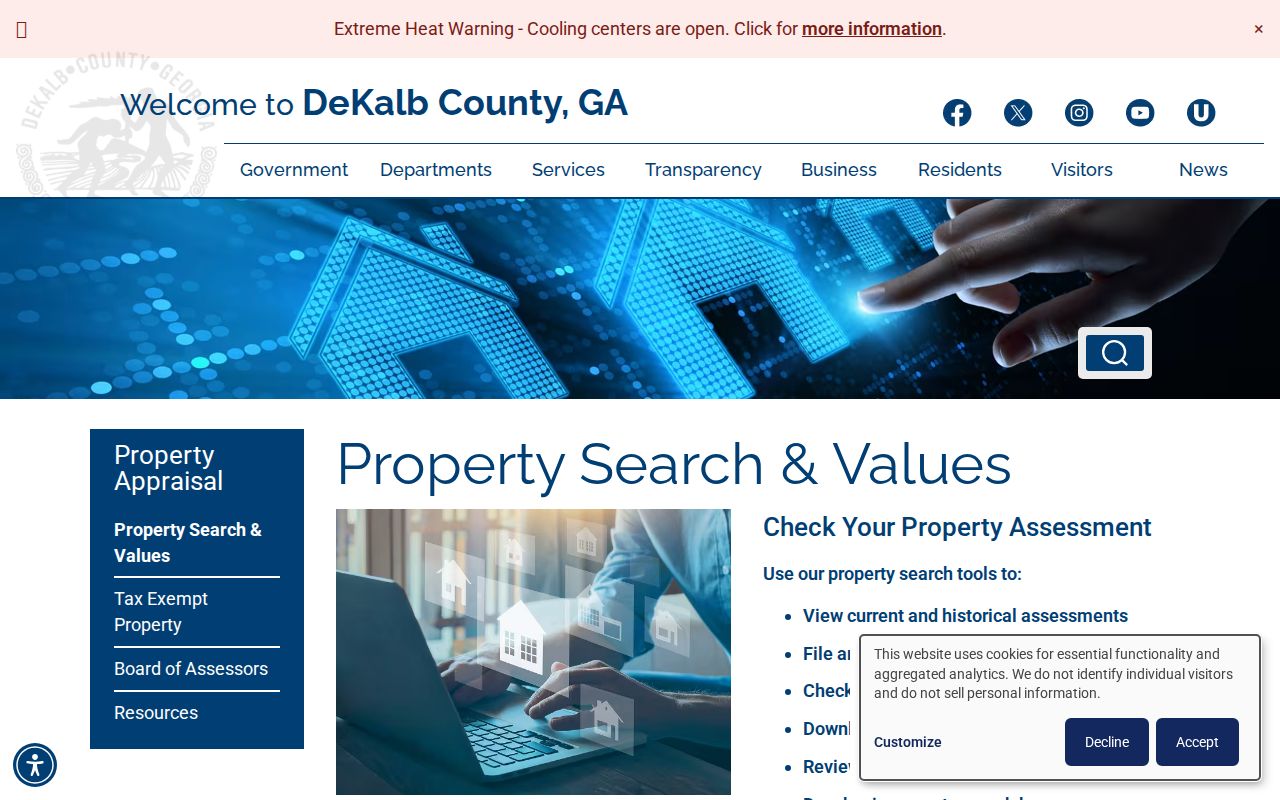
The official DeKalb property search page leads to the tool and explains current and historical assessment information.
A mailing mismatch can reflect a trust, estate, business, representative, or owner preference. It proves neither vacancy nor the presence of a renter.
Connect Tucker Parcels to Deeds
A parcel card is an assessment record, not the recorded transfer. Move from the current owner's indexed name or parcel ID to DeKalb LandmarkWeb. Search modes include Name, Document, Book/Page, Parcel, Date, Instrument, and Legal. The online notice states coverage from 1979 to the present. Search all plausible spelling forms. Names, trusts, and entities may be indexed differently.
The official LandmarkWeb screen appears below.
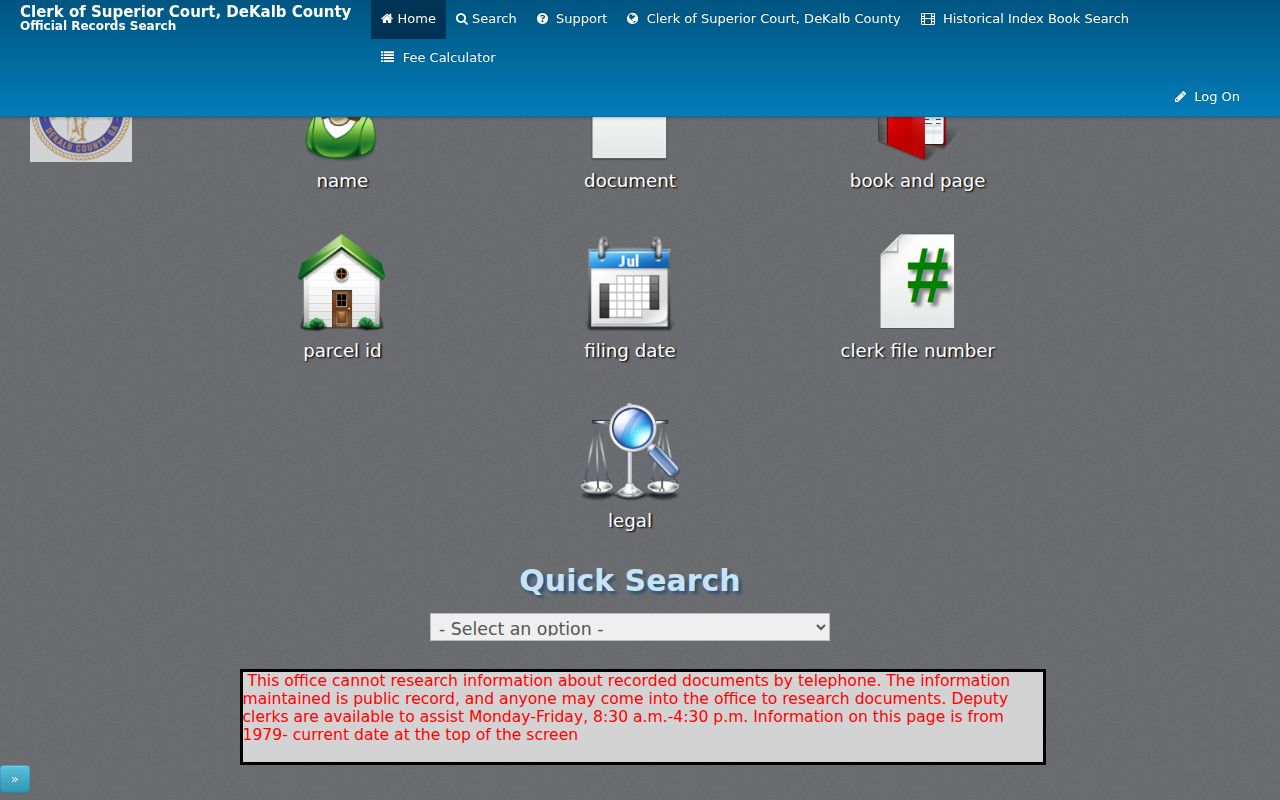
A deed result can identify grantor, grantee, document type, recording date, instrument number, book and page, legal text, and parcel reference. A grantor transfers an interest; a grantee receives one. Pull the image for full context.
The courthouse public room offers computers and older books. Mail requests can cite book type and page. Regular copies cost $1 per page, plats $2 per page, and certified copies $2.50 for the first page plus $0.50 for each additional page. The clerk also points researchers to the separate statewide GSCCCA channel.
Tucker City Hall Name Trails
City files start with Tucker's municipal era. The City Clerk keeps council minutes, ordinances, contracts, election material, and other city documents. Planning, building, occupational tax, alcohol licensing, code enforcement, GIS, and municipal court files may each name an owner, applicant, respondent, or business contact. None is a general household roll. The Tucker City Clerk page identifies the municipal records office.
The city staff directory is searchable and sortable. Fields include name, title, department, phone, and email. It is a public-work contact list. A listed employee's office role should never become a claim about a private address.
Code complaints carry a notable local privacy choice. Tucker warns that a complainant's supplied name, phone, or email may be released under open-record law. The form allows anonymity. That warning shows why researchers should read each source's purpose before reusing a name.
Request Missing Tucker Records
When no index exposes an existing city record, use Tucker's JustFOIA route. State the record type, address or person, date range, department, and case or permit number. Also give the desired format. Georgia agencies must respond within three business days. Exemptions and lawful fees may apply. A response may deliver a production estimate and cost rather than the record itself. The Tucker open-records page provides the submission and invoice path.
A city office can copy records it already holds. It need not build a fresh resident list. It also does not have to chase county files or answer open-ended research questions. So frame any Tucker request around an existing item: a permit, a complaint file, a disposition, a report, a list, or a set of correspondence.
For the statewide rules behind these requests, the Georgia Open Records Act resources lay out the framework that governs every records office in the state.
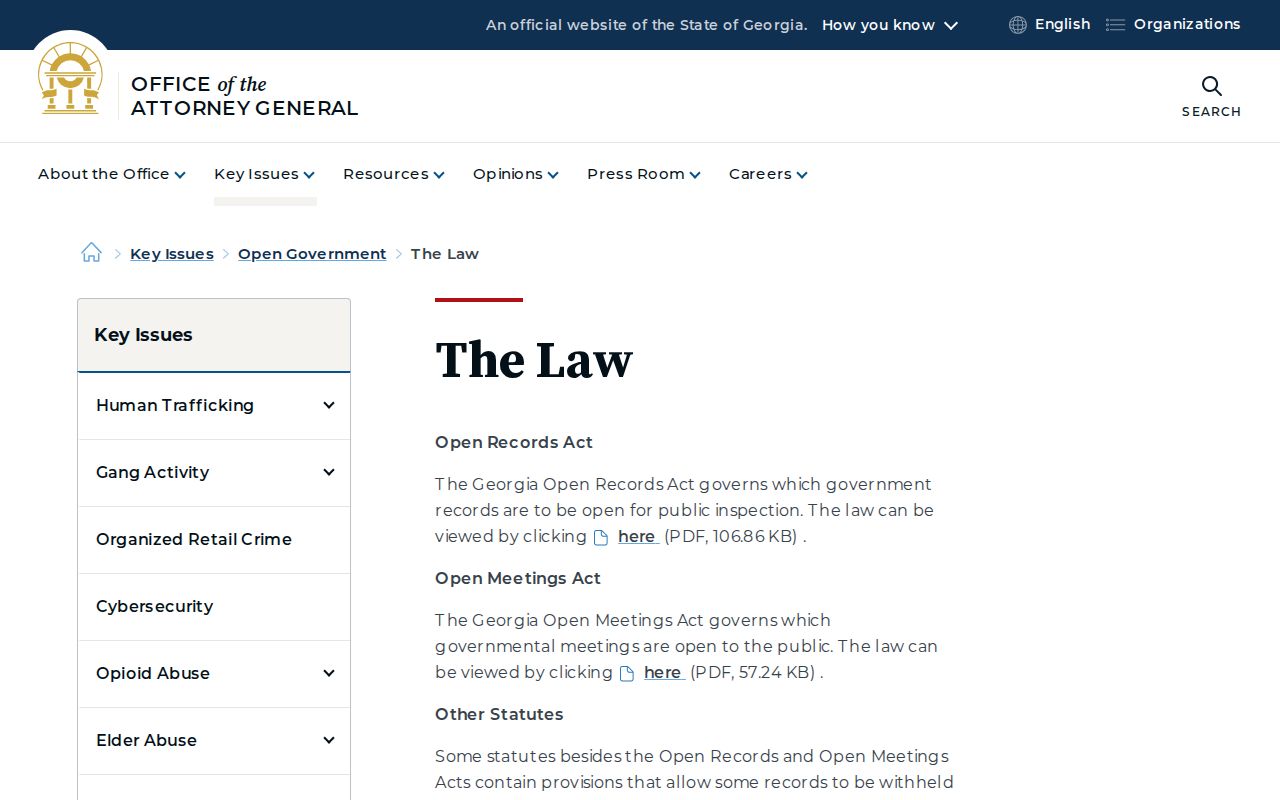
The official law page also clarifies the difference between a delay, a fee estimate, an exemption, and a referral to a different custodian.
Current Tucker Residents Directory Sources
No single current record works like a true residents directory for Tucker. Each one covers only its own population. The appraisal roll names titled owners, not every occupant. My Voter Page confirms one registered voter at a time after identity input.
Landmark indexes the parties to recorded instruments. City directories list staff or public business contacts. Court indexes list parties. Any of these can leave out a person who actually lives in Tucker.
| Source | Who Appears | Keeper | Access |
|---|---|---|---|
| Property roll | Titled owners | DeKalb Property Appraisal | Free web search and office |
| Deed index | Instrument parties | Superior Court Clerk | 1979-current web; older counter |
| My Voter Page | Validated individual voter | Georgia Secretary of State | Personal identifying input |
| Court dockets | Named case parties | Correct court clerk | Portal, terminal, or request |
| City staff directory | Municipal employees | City of Tucker | Free searchable table |
Official records carry a custodian, a date, a record number, and a legal role. Commercial people-finder summaries blur that precision. They often merge old addresses with same-name people while charging for facts that may be stale, so use an official index to frame the question and the underlying document to confirm the answer.
Use Tucker Voter Tools Carefully
The Georgia My Voter Page asks for a first initial, last name, county, and date of birth. It returns registration, polling place, district, ballot, and election details for one matched voter. It is not a way to browse a street. A person's absence from MVP does not prove they do not live in Tucker.
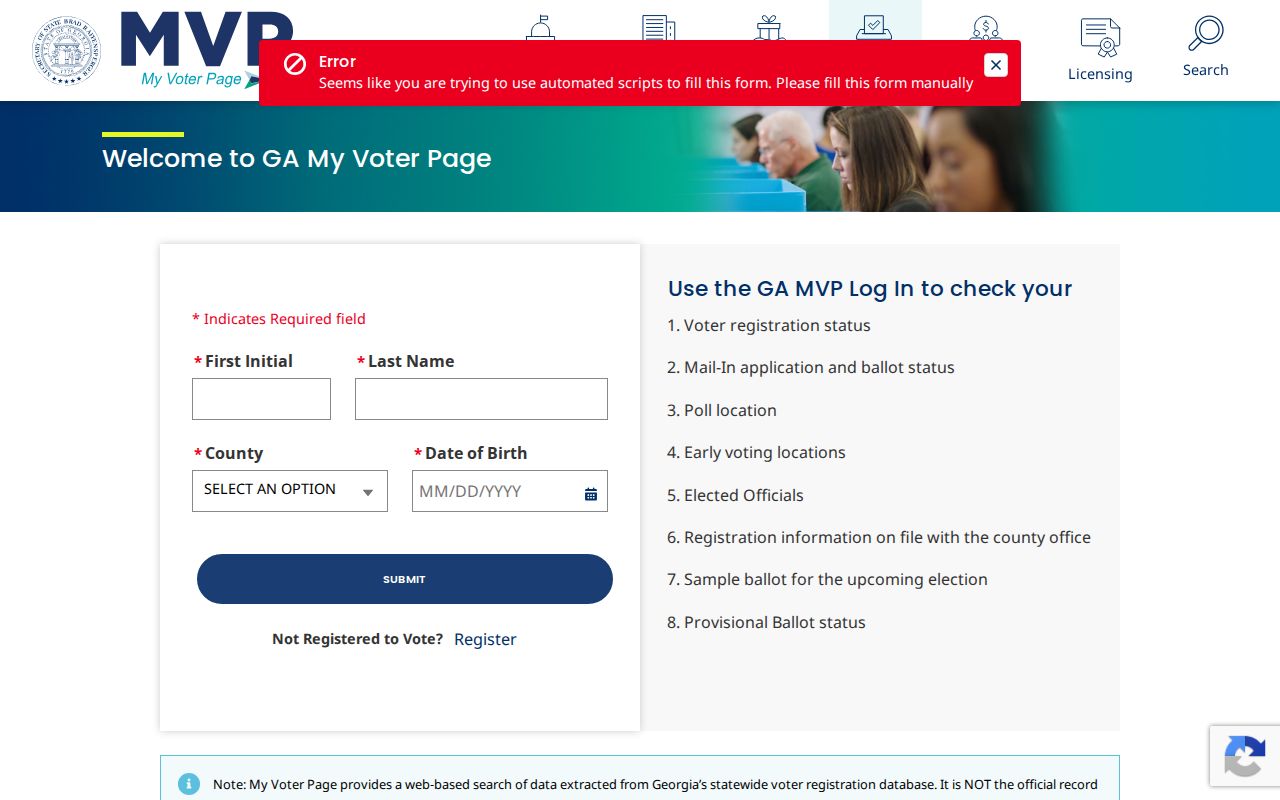
Those identity checks separate MVP from the bulk voter file, which is a different access channel. DeKalb Elections holds the local administration records. The Secretary of State separately sells voter lists by offered geography and status. Protected data and lawful-use limits still apply. Participation history never reveals a candidate choice.
Tucker Votes takes a home address and returns City Council, county commission, state legislative, and other districts. After an annexation, it works well as a geography cross-check. It is not a resident roll.
Choose the Right Tucker Court
Court records in Tucker split across several benches. Tucker Municipal Court covers qualifying ordinance, misdemeanor, and traffic matters inside its jurisdiction. DeKalb State Court handles the county's statutory civil and criminal work, while Superior Court takes felonies, divorces, equity, title, and major civil matters. Magistrate Court covers small claims and other assigned proceedings. Probate Court handles estates, wills, guardianship, and marriage licensing.
Federal matters belong in the Northern District of Georgia. The DeKalb court records portal gives a current county search path.
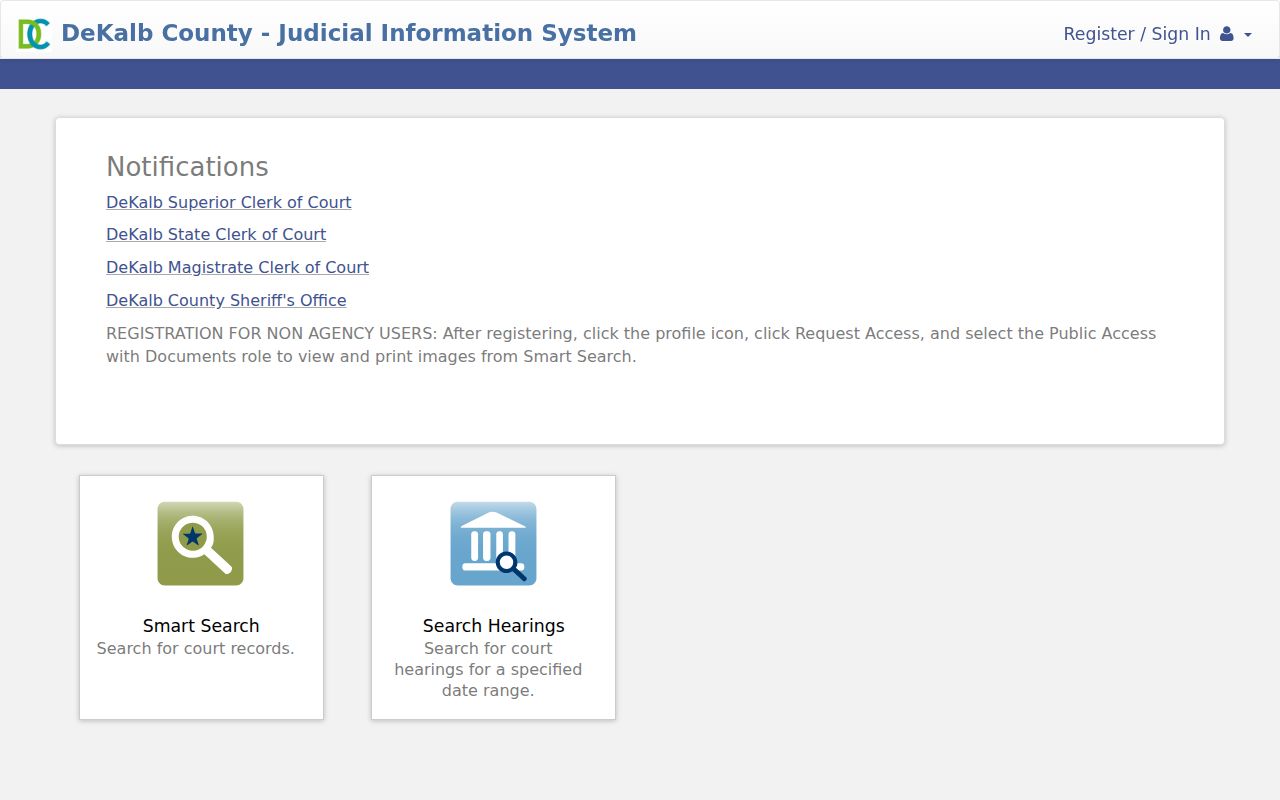
A docket result can show a case number, parties, role, case type, filing date, judge, events, and status. An index alone never proves a same-name Tucker resident is the party. Match the role, the date, an address where lawful, and the underlying file.
Confirm Tucker Vital Events
Vital records answer event questions, not current-location questions. Georgia DPH registers births, deaths, and fetal deaths. It also registers marriages and divorces. Birth certificates stay restricted to the registrant and authorized family or legal representatives. Death releases follow state rules plus Social Security redaction. Marriage and divorce copies move through their own probate, court, or state routes.
The Georgia Vital Records hub carries the current ordering paths.

DeKalb Library offers useful index leads for older events. Georgia deaths run from 1919 through 1993 on microfiche. Deaths from 1994 through 1999 are on CD, with marriage and divorce registers covering defined years. An index can guide a certificate or decree request. It cannot replace the certificate itself. Georgia's current pages state no universal fifty-year or hundred-year opening rule.
Historical Tucker Residents Directory
Printed directories fill the gaps between deeds, censuses, and life-event records. The only identified countywide DeKalb directory dates from 1939. Tucker and Stone Mountain volumes survive for 1970, 1972, 1974, 1975, and 1976. Broader Atlanta and suburban directories were combined until 1956, split afterward, and ended around 1991. DeKalb Library's general directory holdings reach back to 1928.
A single entry can supply a name, spouse, occupation, and street address. The reverse, or criss-cross, section rearranges entries by street and house number. Coverage varies. A missing entry means only "not found in this volume." The full shelf is on the Tucker city directory page. The reading method lives there too.
- Roll
- An official list kept for a defined public purpose, such as property appraisal.
- Index
- A finding aid that points to a fuller document or file.
- Criss-cross directory
- A directory ordered by street address rather than surname.
- Parcel
- One tract of land identified by the county for mapping and appraisal.
Tucker Archives Fill Online Gaps
DeKalb County Public Library holds directories, census material, newspapers, cemetery records, and microfilm. It also keeps Sanborn maps and vital indexes. The DeKalb History Center adds maps, directories, title abstracts, and subject files. Its Tucker-specific trove includes twenty Tucker Elementary scrapbooks, the 1957 Tucker Time Capsule, and Tucker Days inserts. It also holds Tucker Times and Up Close & Personal In Tucker. No single house or resident archive exists, so staff and catalog help matter.
A 2026 accession extended Tucker Times through 2019 and Up Close & Personal through 2025. Those community publications bridge the years after printed city directories ended. Search names with spacing, hyphens, suffixes, transliteration, trust names, and business forms. Then corroborate any article or caption against an official record.
Historical maps solve address drift. The local house-history guide notes metro number changes in 1892 and 1926. A 1915 owner map, early plat books, a 1969 Tucker plat map, topographic sheets, and Sanborn volumes span the collection. Each shows a different view of ownership, roads, subdivisions, and buildings.
The DeKalb Fire Record Gap
DeKalb County dates back to 1822. The Clerk treats 1842 as the practical start for surviving real-estate records. A courthouse fire destroyed nearly everything earlier. The History Center cites an 1822-to-1910 deed index. It also notes that extant deed book Volume L begins in 1846. So an index entry can point to a deed book that no longer exists. Details matter here.
One minute book from 1836 through 1843 survived. The clerk had carried it home. No one has proven what caused the fire. Cite the surviving book or index, and let archive staff reconcile dates for each series. LandmarkWeb adds a quieter gap with its 1979 online cutoff. Anything older demands courthouse books, indexes, or archive help.
Volume explains the rest. The clerk handles more than 204,500 title-affecting documents a year. Exact names, dates, parcels, and book-page references save everyone time at the counter.
Tucker's Old Community Split
Tucker's railroad depot and post office put the community name on the map in 1892. City government did not arrive until 2016. A family can therefore show decades of Tucker deed, directory, school, newspaper, and civic evidence with no old Tucker City Hall file. County and state offices created most public records before incorporation.
The city now stretches across several distinct record settings. Downtown and Main Street form the old commercial core. Northlake carries office, medical, and regional retail activity. Lawrenceville Highway crosses retail and suburban stretches, while Mountain Industrial Boulevard holds many entity-owned properties with off-site mailing addresses. Smoke Rise, Embry Hills, Idlewood, Livsey, Wanda Woods, and Westwood show up in community or annexation records.
Postal labels can mislead too. A Northlake parcel may carry an Atlanta 30345 mailing identity yet lie inside Tucker after annexation. A 30084 label can also fall outside the city. Resolve the parcel and the date first, then decide which government held a permit or case.
Protect Tucker Resident Addresses
Georgia Safe at Home gives eligible survivors a substitute address with mail forwarding. VoteSafe shields a qualifying voter's residence address for four years. These are separate programs, and a substitute or missing address is never evidence of fraud. No one should combine databases to uncover one.
The Georgia Consumer Privacy Protection Act took effect July 1, 2026. Its scoped commercial-data rights do not erase lawful records. Court, tax, and deed records remain. Voter and other government records remain too. Commercial deletion requests, custodian corrections, statutory redactions, and confidentiality programs each stand alone. Juvenile, adoption, sealed, restricted, victim, driver, vital, and identifier facts may be closed.
Lawful use. Use Tucker records for genealogy, reconnecting, estate work, scam avoidance, civic transparency, and personal safety, never to stalk, harass, impersonate, or defeat a protection program.
Verify each result with its custodian. A record's date and legal role matter as much as its name. Public access is permission to inspect, not permission to make a claim the record cannot support.